Tuesday, June 8, 2010

The Surprising Truth About What Motivates Us

4 Comments

In Information Technology, it seems you can’t buy employee commitment.

In fact, when it comes to encouraging people to work cognitively, on brainpower tasks that require creativity or abstract thinking, cash is more of a de-motivator than a motivator.

Don’t believe me? Take ten minutes to watch this surprising video.

“Bottom line: If we treat people like people, instead of like horses…”

The conventional wisdom is that you “pay for performance.” The truth is, well, something else altogether. Instead of inspiring quality effort, extrinsic monetary rewards actually discourage high-quality work.

So much for extrinsic motivators. To learn about a very effective system of intrinsic motivators, click here, then come back and answer these questions.

Questions:

  • Leaders/Managers: On your team or project, or within your organization, which extrinsic incentives (e.g., money) have you used to motivate people? Which have worked? Which haven’t?
  • Everyone: Which intrinsic motivators best inspire you in your professional pursuits? Do you work within an organizational culture that understands and respects this? If so, how is this expressed in that culture? If not, what do you think management can/should do to correct it?

Tuesday, June 1, 2010

Measuring ≠ Accomplishing

5 Comments

t+0: Helpdesk Support Ticket opened

image

t+5 seconds: Helpdesk Support Ticket closed

image

t+forevermore: User Totally Frustrated

image

Notes:

  • Both people feel they’re doing what their company wants them to do.
  • Neither is listening to the other.
  • The user's problem isn't resolved.
  • Yet, according to the helpdesk ticket’s statistics, "Mission Accomplished."

How is this possible?

Thoroughly researched over many years by countless organizational and social psychologists, cognitive dissonance enables people to perceive failure as success. Ironically, the systems IT organizations use to measure success can be “gamed” to provide cover for such misperception.

Questions:

  • Do you believe that the metrics you use to manage your people capture the acts of service they perform?
  • How do you follow up on your systems of measurement to ensure that they do?

Monday, January 11, 2010

Dumb Like Einstein, and Another Important Heresy

2 Comments


Einstein1921


“God doesn’t play dice with the Universe.” Thus tweeted the Great Albert Einstein in 1926. And, ever since, folks everywhere have been retweeting this profound revelation about God, straight from the Gospel According to Albert.

Problem is, Einstein didn’t exactly say that. Here’s what the man actually wrote, in a letter to pioneering quantum physicist Max Born:

“Quantum mechanics is certainly imposing. But an inner voice tells me that it is not yet the real thing. The theory says a lot, but does not really bring us any closer to the secret of the 'old one'. I, at any rate, am convinced that He does not throw dice.

Albert’s Intellectual Limitations

Turns out Einstein, the man who by 1926 had earned copious major honors by revealing the architecture of the Universe at Large, wasn’t really referring to God in his letter at all. The Great Genius was, in fact, confessing his own difficulty in grasping the basic architecture of the  Quantum Universe of the Very Small. Biased, perhaps, by his subjective familiarity with a personal Almighty, Albert’s “inner voice” had  misinformed his objective understanding of the nature of reality’s littlest things.

Einstein strongly (stubbornly?) believed that randomness in scientific observations resulted from human imperfection in observing and understanding. Make perfect the instruments and sharpen and deepen the theory, he figured, and, poof! like a god, you know everything, and can therefore predict the cosmically enormous set of all possible future events, even the very tiniest ones, with 100% certainty.

This Determinist Einstein just couldn’t accept what his contemporary einstein-tongue-jpgparticle physicists were demonstrating over and over again in their labs. Where certain behaviors of really little things like electrons and photons are concerned, no matter how smart the physicist or perfect her instruments, making certain kinds of predictions about the outcomes of certain quantum phenomena are, well, just plain uncertain.

So, in his oft-paraphrased and widely misunderstood 1926 letter to Max Born, the Great Albert Einstein was, duh! just plain wrong – at least about quantum physics, and perhaps even about God, Who may indeed have some sort of Supreme Gambling Problem.

(Still, “God doesn’t play dice with the Universe” sure sounds right, doesn’t it?)

The Psychological Limitations of “Process” in IT

Wait! Duh! Don’t stop reading. This story has everything to do with Information Technology.

Information Technology’s leaders, of projects and of people, emerge from the fundamentally deterministic world of machines, wherein every action has a 100% predictable outcome. This world, of course, has its unexpected bugs and breakdowns, but the reliable solution for buggy machines is process: time-proven repertoires of well-understood and clearly documented procedures that help mitigate the risks of faulty technology by rigorously squeezing out its pesky uncertainty.

This successful experience with managing machines can easily spur a Quantum Misstep of twisted logic in managing people. “After all,” our inner voice reasons, “aren’t people really just like machines? Of course they are!”

The conclusion sounds right, but it’s dead-wrong. Unlike machines, people, cursed as they are with Free Will, behave, like quantum particles, in fundamentally unpredictable ways. Psychologists have long recognized  a “Human Uncertainty Principle” of sorts: the more confined people feel by the processes their leaders impose on them, the less predictable their organizational behavior becomes. IT leaders see process as governance, but those so governed often perceive it as micro-management. Especially in the most talented and creative, micromanagement triggers rebellion rather than compliance.

Frustrated by process, followers find creative ways to avoid following their leaders. In turn, their leaders, dismissing these little mutinies as failures of their Human machines, sharpen their procedures to tighten the harness and regain control, which only provokes further mutiny. As leaders lend greater and greater weight to following process in order to reduce the degrees of freedom for failure in the groups they manage,  they unwittingly generate a psychological “black hole” that ensnares all chances of success as well. Individual efforts stall, projects slip, and neglected infrastructure eventually sputters and fails.

A Way Out of the Psychological Singularity

Of course, process certainly plays a role in effective management, but it can’t guarantee effective leadership. Go here and begin learning about the non-deterministic, Zen-like principles of Servant-Leadership: that the true path to leading people starts with serving them; that the most effective way to shepherd their efforts is to set them free.

When you come back from reading, try this new kind of “Non-Process” on for size in 2010:

Step 1. Accept intellectually that people behave in non-deterministic ways, and that, particularly in knowledge-worker fields like IT, this necessarily limits your ability to govern their actions.

Step 2. Once you’ve accepted the basic uncertainty of human behavior, you will naturally begin to question your feelings about your colleagues and subordinates. This fresh uncertainty, while uncomfortable at first, is very healthy. Let it teach you:

  • The people you “like” best aren’t necessarily your best people
  • The people you “like” least may, in fact, have the most to offer
  • While, by behaving unpredictably, machines can only bitterly disappoint you, people, with your permission and support, can very pleasantly surprise you.

Step 3. Beyond articulating the details of tasks, your transcendent role as an IT (or any) leader is to reveal the human value of the larger goals you choose to serve.

Step 4. Once the human value of your organization’s goals have been revealed to them, people will drop the heavy baggage of their personal egos and begin to gravitate toward helping you to achieve them. Remember that they aren’t following you as a leader; they’re following your lead toward something larger than each and all of you. Congratulations! By tapping the source of authentic leadership, you’ve entered the larger world of the Servant-Leader.

Step 5. Never, ever play favorites. Everyone has value, whether you like them personally or not. Treat everyone with respect and, as you support them, they’ll all work hard with you, each in their own wonderfully different way, to help you achieve your organization’s goals. (Remember that, on the other hand, you cheapen the work you’re trying to inspire when you treat it like a win-lose game. You may think you’re being clever, but you undermine your own leadership in the long run when you “play” people for short-term gain.)

Step 6. Full- or part-time employee, contractor, consultant, whatever --everybody’s somebody. Be prepared to recognize everyone for the value of their contributions, regardless of what’s printed on their business cards.

Step 7. Every organization needs its “operators,” the go-to-guys, the t-crossing and i-dotting detail-oriented folks who devise and follow effective processes. But beware the hidden trap of settling for the merely routine and declaring it “excellence.” Excellence is something more.

Which prompts the most important of questions for any organization or society: what is Excellence?

Einstein Finally Redeemeddancesteps
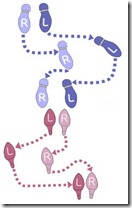
Is dancing purely a matter of process? Does clear and precise choreography determine the quality of a dance performance? Does putting your feet exactly where and when you’re told make you a dancer? Will carefully following a really precise floor chart make you an excellent dancer?

Dancing, especially good dancing, transcends choreography. Excellent dancers exceed the specifications of choreography. They amaze an audience, and pleasantly surprise their choreographer, as they freely capture and ride the spirit of a performance.

Likewise, in all the work we humans do, how can excellence possibly emerge from simply following a process? Can a really good paint-by-numbers Mona Lisa elevate anyone to the level of a DaVinci?

Following process and meeting expectations is adequacy, and adequacy is virtuous. Adequacy has its place.

But excellence is more. Excellence is the miracle of exceeding expectations. Perhaps because we fear failing to repeat it, we sometimes tend to mistrust excellence. So, we shy away from it, perhaps most often by withholding, from ourselves and others, the freedom on which excellence feeds, which it needs to survive.

Here’s where old Albert, after nearly a lifetime of saying his share of dumb things, got one absolutely right (Out Of My Later Years, 1950):

“Everything that is really great and inspiring is created by the individual who can labor in freedom.”

Monday, December 14, 2009

The Twin Illusions of Conflict and Power

0 Comments

Aesop's fable, "The Dog in the Manger," concerns a barnyard dog who one afternoon lay down to sleep on top of the hay in the barn's manger.

On being awoken, he growled and barked. "Woof woof!"

He ferociously kept the animals from eating the hay in the manger, even though he couldn't eat the hay himself.

A frustrated ox offers the moral of the story: "people often begrudge others what they cannot enjoy themselves."

The modern discipline of Information Technology gives Aesop's centuries-old fable fresh relevance. Imagine that you're the technical person in charge of your company's newly installed state-of-the-art information system. It might be a complex software tool, like a big-deal Oracle database management system. it might be something simpler but just as important (and expensive), like EMC's latest and greatest networked disk drive array.

You may have helped your organization evaluate and select it. Perhaps you supervised its installation and initial configuration. You've gone over and over its manuals and technical notes for many weeks or months as you've mastered its elaborate ins and outs. You've updated its software and firmware, tweaked and tuned it to perfection, and demonstrated its cool features with pride to your colleagues and management. And, of course, you've upgraded your mental resume, and maybe its embodiment on paper as well, to reflect all of your wonderful new experience with it.

Then, one day, inevitably, others in your organization approach you to make use of it. They ask you for its administrative password, inform you that they plan to migrate some corporate division's data to it, advise you that they intend to connect it to some backup/restore system. In short, they announce their intention to take it from you.

How do you feel about this? After all, it's your system, isn't it? How do you act on those feelings? Do you look for ways to say "yes," or do you look for ways to justify saying "no?"


Thomas and Kilmann Conflict Modes

According to Kenneth Thomas and Ralph Kilmann (1974), conflict is a matter of perception rather than fact, and, as such, people can imagine it where it doesn't actually exist. Experience suggests that Information Technology professionals, who tend to entangle their subjective sense of personal self-worth with the objective details of the tools they master, are perhaps more likely to misinterepret as an attack on their ego the logical next-step of handing their beloved tools over to be applied in practice by others. I've known many a colleague who, after insisting that they wanted nothing to do with the day-to-day details of some subsystem they'd installed, nonetheless resisted stubbornly any others who dared try to assume responsibility for it themselves.

Come to think of it, I've been that colleague, and more than once. Was I rightly defending an important technical resource from possible misuse? Or, was I merely defending my own bruised ego? In hindsight, I can tell you that those weren't exactly my finest professional hours.

According to Thomas and Kilmann, people choose to respond to conflict, whether real or imagined, in one of five behavioral modes (see diagram above). There are two ways to cooperate: assertively, by working with the conflicting parties, or more passively, by simply accommodating their wishes.

Thirdly, there's the neutral middle-ground choice of seeking compromise.

And, finally, Thomas and Kilmann posit two ways of saying "No," of refusing cooperation: assertively, by competing, or passively, by avoiding conflict through uncooperative resistance.

Thinking back, as I reacted to the imagined threat my colleague posed when he asked me to hand over that storage subsystem, what choices did I imagine I had?

Active cooperation and passive accommodation would have meant sharing continuing praise and credit for a job well done, my job, with someone else. The middle ground of compromise would have meant surrendering it altogether.

On the other hand, I couldn't actively compete with my colleague for ongoing ownership of the new system, because management wouldn't have supported me, and, besides, I really didn't want that job myself.

So, I resisted. I chewed onto ownership for as long as I could. I snarled at requests for access to the subsystem's passwords. I dogged those last steps needed to make the subsystem operational. And, in doing all of this, I starved my organization of something it needed, delayed others' projects, frustrated others' goals.

What's another word for passive-aggressive behavior? How about "Woof woof."

Discussion Questions:
  • In your experience, in the context described in this post, would a typical IT manager be more likely to support or change an IT practitioner's passive-aggressive behavior?
  • What would be a manager's best strategy for dealing with this situation?
  • How might a frustrated IT practitioner go about changing a passive-aggressive colleague's conflict-handling mode from competitive to cooperative?

Monday, November 16, 2009

"The Little Engine That Could" Could be You

3 Comments


"I think I can, I think I can," puffed the little "Engine That Could," struggling against all odds to pull a stranded train up a steep hill. And, because it believed that it could, guess what? It actually did!

And, guess what else? Psychological research indicates a scientific basis for this inspirational little tale.

According to research done by social psychologist Albert Bandura in the 1990's, a psychological construct known as perceived self-efficacy is a key determinant in, among many other things, the level of success a professional achieves in their work.


Bandura found that, when people believe in their capabilities to exercise control over their own functioning, and over the events that affect their lives, they perceive themselves to be self-effective. On the assumption that a measurement of the strength of this belief would yield a measurement of the related trait of perceived self-efficacy, psychologist Dr. Ralf Schwarzer developed a simple 10-item test to measure it:
Answer:
1 = Not at all true, 2 = Hardly true, 3 = Moderately true, 4 = Exactly true

to each of the following questions:

1. I can always manage to solve difficult problems if I try hard enough.
2. If someone opposes me, I can find the means and ways to get what I want.
3. It is easy for me to stick to my aims and accomplish my goals.
4. I am confident that I could deal efficiently with unexpected events.
5. Thanks to my resourcefulness, I know how to handle unforeseen situations.
6. I can solve most problems if I invest the necessary effort.
7. I can remain calm when facing difficulties because I can rely on my coping abilities.
8. When I am confronted with a problem, I can usually find several solutions.
9. If I am in trouble, I can usually think of a solution.
10. I can usually handle whatever comes my way.

(You can learn more about this instrument, its validity, what it measures, and how it's been used in years of global research, here.)

Bandura identified four factors that reinforce a person's perceived sense of self-efficacy (listed in no particular order; they're each equally significant):

  • Mastery experiences - the innate positive sense of satisfaction and accomplishment one gets from having done something well
  • Observing people similar to oneself managing task demands successfully - learning to be effective by watching others who are effective
  • Social persuasion that one has the capabilities to succeed in given activities  - being told by coworkers and superiors that you have what it takes
  • Inferences from somatic and emotional states indicative of personal strengths and vulnerabilities - the positive physical, emotional, and cognitive "feedback" one senses while successfully doing a job
Bottom Line: To overcome the impediments, adversities, setbacks, frustrations and inequities of professional life, people need a robust sense of efficacy to sustain the perseverant effort needed to succeed. Research has shown that people with a high degree of perceived self-efficacy, as measured by instruments like Dr. Schwarzer's (see above), tend to perform well in their professions.

Discussion Questions:
Is Self-Efficacy always a valid Perception, or sometimes an Illusion?

The application of Bandura's research to understanding IT task performance, with its uniquely abstract work products, begs several fundamental questions. This post's discussion questions are based on a more skeptical look at Bandura's four foundations of perceived self-efficacy:
  • Mastery experiences - do IT professionals pat themselves on the back too much, especially for doing off-point technical jobs that they were never actually tasked with?
  • Observing people similar to oneself managing task demands successfully - what effect does "stealing credit" for something somebody else did have on an individual? More importantly, what effect does it have on colleagues who observed the theft?
  • Social persuasion that one has the capabilities to succeed in given activities - Really? Is that all it takes? Doesn't such persuasion need to have some basis in fact?
  • Inferences from somatic and emotional states indicative of personal strengths and vulnerabilities - In the abstract world of IT, how do we differentiate "real" positive work experiences from delusions?
Thanks to my good friend, and avid blog reader, Joe, for pointing me to this humorous example of stolen credit:


Monday, November 9, 2009

How to Be Your Own Worst Enemy

0 Comments

Thinking back to all those classic Star Trek TV episodes and movies I enjoyed so much as a kid, I realize now that the Mr. Spock character I secretly idolized was, actually, two very different Vulcans.

The "Smart Spock" could always be counted on to perform dizzyingly complex calculations in his head, even under the most dire of circumstances. Bright guy! He always kept his emotions under control, yet he understood and worked very well alongside his chronically overwrought and comparatively slow human colleagues. This Spock was a compassionate and gifted problem-solver.


On the other hand, the "Stupid Spock," for all his obvious cognitive skills, consistently miscalculated the feelings of others and had a great deal of difficulty understanding and controlling even the simplest of his own long-repressed emotions. Dense dork! At his best, this Stupid Spock seemed comical alongside his wise and well-rounded human buddies. At his worst, he was a dysfunctional mess who often inadvertently put the human crew members on the Enterprise at risk.

 What does Smart Spock have that Stupid Spock doesn't? Emotional Intelligence.

Emotional Intelligence is a psychological construct that explains the variable ability of people, functioning in social and professional contexts, to understand and manage their own emotions while recognizing and adapting to the emotions of others.

Emotionally intelligent people, like Smart Spock, can overcome, and perhaps sometimes even harness, their own feelings and the feelings of others to function effectively in social and professional situations. Because emotionally intelligent people can make others feel valued and understood, people enjoy working with them and enthusiastically help them to get things done.

Emotionally unintelligent people, like Stupid Spock, fall prey to their emotions, which can hamper or even disable them. Insensitive or even scornful of the feelings of those around them, emotionally unintelligent people are often left to work alone.

Referring to those who are manifestly most deficient in Emotional Intelligence, Alexithymia is a common risk factor for a variety of personal and social problems. For example, people with alexithymia:
  • can't identify feelings, and often confuse their emotions with the physical sensations (e.g., headaches, nausea) of emotional arousal
  • can't describe their own feelings to other people, or put into words the emotions they observe in others
  • have difficulty imagining alternatives (as evidenced by a paucity of fantasies) in solving practical problems.


Was Stupid Spock's problem on Star Trek that he couldn't understand, control, or adapt to emotions? Or, was that he didn't care enough to try?


Maybe that's what made a Smart guy like Spock so maddeningly Stupid sometimes.


Questions:

  • Do you think there's a difference between ordinary empathy and Emotional Intelligence? What do you think it is?
  • In practical terms, how do you think Emotional Intelligence (or a lack thereof) might affect the performance of a technical task, or the outcome of an Information Technology project?
  • What do you imagine would be the first step toward increasing your own Emotional Intelligence?
  • How might you begin to coach an EI-challenged colleague?
  • When working with someone who may have Alexithymia, what kind of professional behavior should you avoid?

Monday, November 2, 2009

Chickens, Pigs, and Superpigs

0 Comments
Q: What's the difference between a chicken and a pig?

A: In a bacon and egg breakfast, the chicken is involved, but the pig is committed.

Following up on this blog's last post about Belbin's inventory of team roles, when it comes to any given role that might be played on an Information Technology project team, there are those who calculate, track, and complain about the length of the critical path, and those who take action to shorten it. 

In psychological terms, involved team members observe failures, such as missed deadlines and unrealized goals, in a cerebral and detached way, as if from the outside. These folks offer great comments at post mortem meetings.

On the other hand, committed team members feel such failures as emotionally painful, and this spurs them to act pre mortem, often heroically, to prevent failures.

Various theories of psychodynamics postulate a mechanism, cathexis, to explain the committed individual's investment of their mental and emotional energy in playing an activist role in making their team successful.


A growing school of management theory, Servant-Leadership, suggests that, by persistently demonstrating selfless service to their colleagues in joint pursuit of the goals of their team, committed members can trigger cathexis in their merely involved co-workers. In other words, there are some Pigs who, magically, seem to be able to turn the Chickens around them into more Pigs. Let's call these inspirational players Superpigs, and, when it comes to getting things done, and done properly, theirs is, indeed, a very handy superpower.

So, on IT teams, there are always Chickens, sometimes Pigs, and, every now and then, Superpigs. Which begs these important questions:


  • What can C-Suite executives and line managers do to support the Pigs in their organizations, and foster the emergence of Superpigs?
  • What common managers' mistakes (inadvertent, of course) tend to demotivate Pigs and turn them into mere Chickens?
  • What factors motivate the Pigs? How are a Superpig's motivations different?